Mexico City · Mexica
We have visited Templo Mayor. At the heart of modern Mexico City, the surviving sacred precinct reveals part of the ancient Mexica capital of Tenochtitlan.
What to see at Templo Mayor
Explore the successive construction stages and surviving structures, then make time for the adjoining museum. The contrast between the ruins and the modern city is part of the story.
Planning your visit
Templo Mayor is in Mexico City’s historic centre, beside the Zócalo and Metropolitan Cathedral. Check current official museum and site information before visiting.
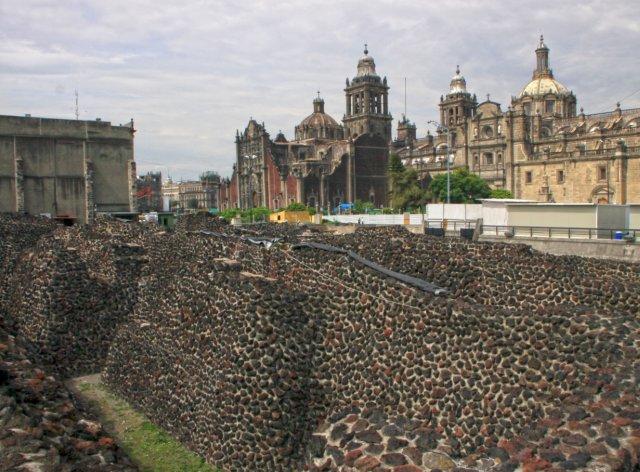
Tenochtitlan Templo Mayor was one of the main temples of the Aztecs in their capital city of Tenochtitlan, which is now Mexico City. Its architectural style belongs to the late Post classic period of Mesoamerica. The temple was called the Huey Teocalli in the Nahuatl language and dedicated simultaneously to two gods, Huitzilopochtli, god of war and Tlaloc, god of rain and agriculture, each of which had a shrine at the top of the pyramid with separate staircases. The temple, measuring approximately 100 by 80 m (330 by 260 ft) at its base, dominated a Sacred Precinct. Construction of the first temple began sometime after 1325, and it was rebuilt six times after that. The temple was destroyed by the Spanish in 1521. The modern-day archeological site lies just to the northeast of the Zocalo, or main plaza of Mexico City, on the corner of what are now Seminario and Justo Sierra streets.
Admission: see the updated visitor information above.
Continue exploring
More archaeological sites in Mexico City · Mexico map
Plan the road journey with OnTheRoadIn.com and find more travel stories at DriveMexicoMagazine.com.