Columns, carved stones, and quiet corners reward a closer look—and can change the photographs you bring home.
Words and photographs by Bill Bell
I’m Bill Bell, and Dorothy is my wife. Together, we’ve been exploring Mexico’s ancient sites for over 35 years, sharing a love of travel, discovery, and the places we find along the way. We love wandering through these places: following jungle paths, climbing where it’s permitted, and looking for the tucked-away corners beyond the main plaza. Part of the pleasure is wondering what’s around the next bend—a small building, a carved stone, or a view we would have missed if we’d turned back at the pyramid.
Our visits go back to the days when you could still climb the pyramids at places like Chichén Itzá. We loved that sense of discovery, and we still do. Even with today’s restrictions, there are many places left to explore within the areas open to visitors. For me, taking photographs is part of that pleasure—a way to remember both the grand views and the small discoveries Dorothy and I make together.
This story is an invitation to take a little more time with these sites. The main pyramid may be what brings you through the entrance, but there is often much more to notice: carved stones, smaller buildings, quiet courtyards, and paths through the jungle. We want to share the pleasure of looking beyond the best-known monument and finding the details that make a place memorable to you.
The photographs here offer a few starting points for that kind of visit. You don’t need to be an archaeologist or a serious photographer—just curious enough to slow down, look closely, and explore the areas open to visitors. A photograph can help you remember those discoveries, but enjoying the place comes first.
The tallest building usually gets the first photograph. It rises above the trees or anchors a plaza, giving us an obvious place to point the camera. Once that picture is taken, we like to see what else is waiting along the next path.
A row of columns. A carved surface beside a staircase. The meeting of two low walls. These smaller features can hold our attention just as firmly, especially when we stop trying to fit an entire archaeological site into one frame.
Start with the spaces between
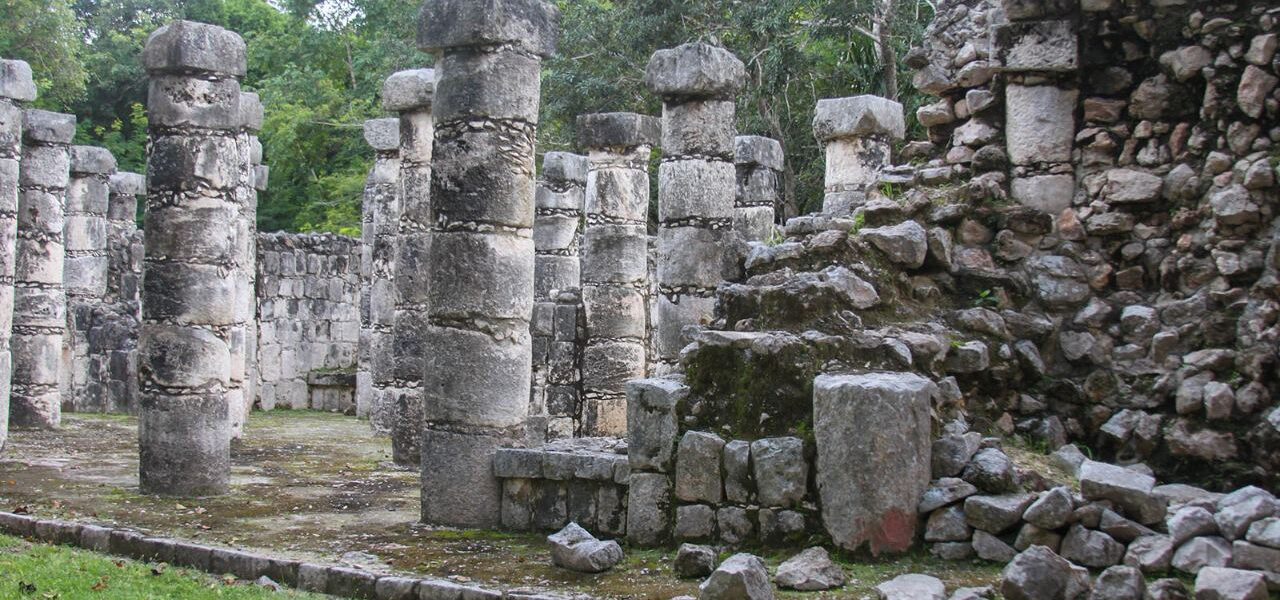
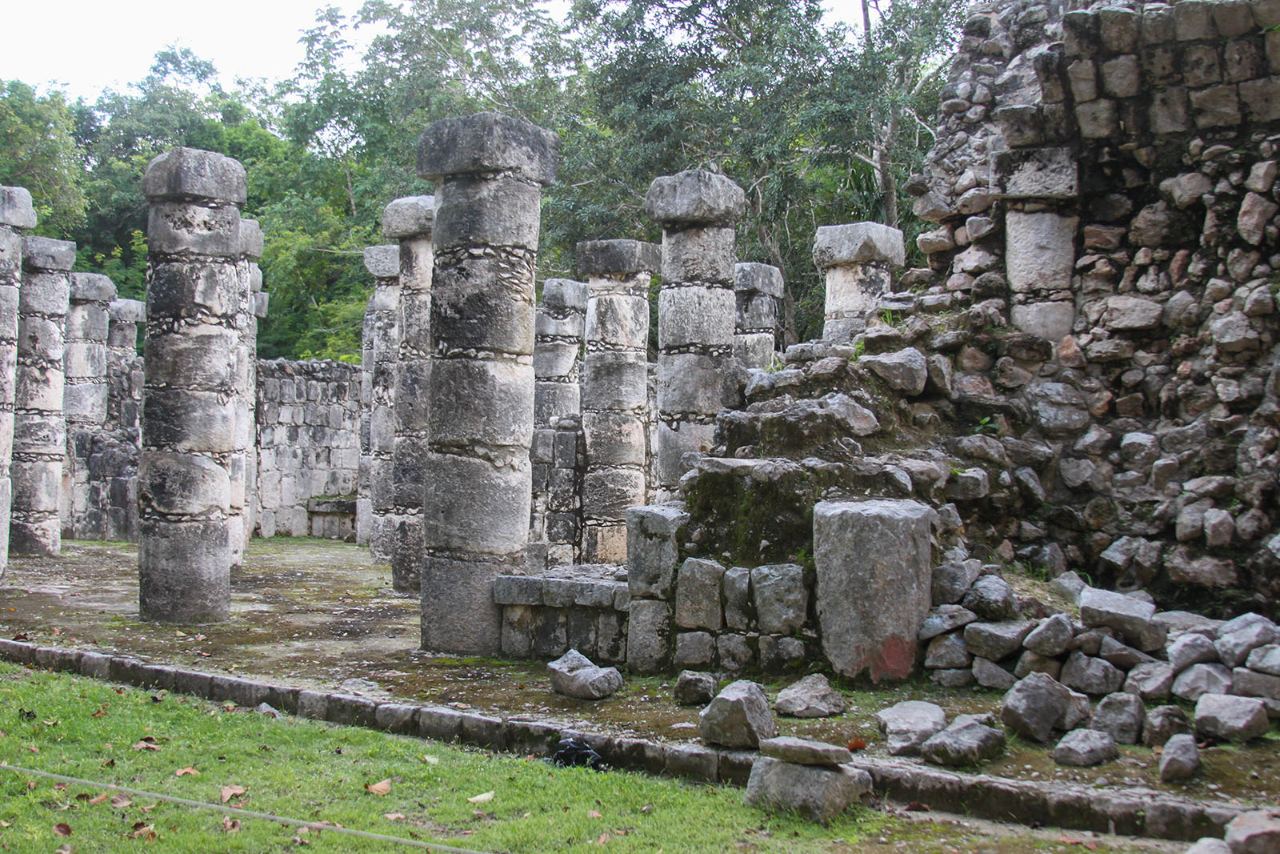
At a group of columns, look beyond the individual stones. Notice the intervals, the alignment, and the way one row appears through another. A slight change in viewpoint can turn a confusing collection of ruins into a readable arrangement.
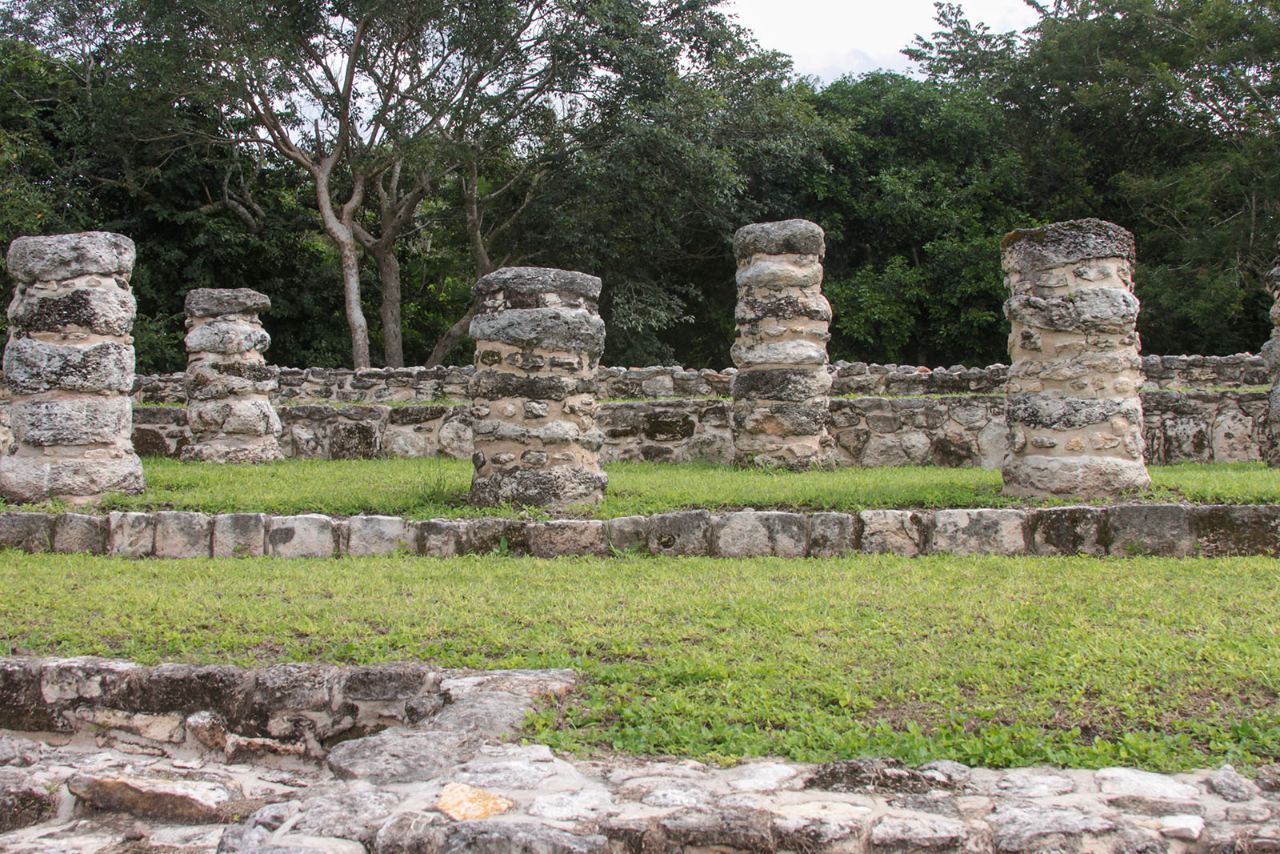
In one of our photographs, rows of columns overlap, drawing the eye deeper into the stonework. In another, shorter columns spread across an open, grassy space. I like having both kinds of picture: one that helps me remember the place, and another that brings me back to something small I stopped to look at.
Let your eyes follow the steps
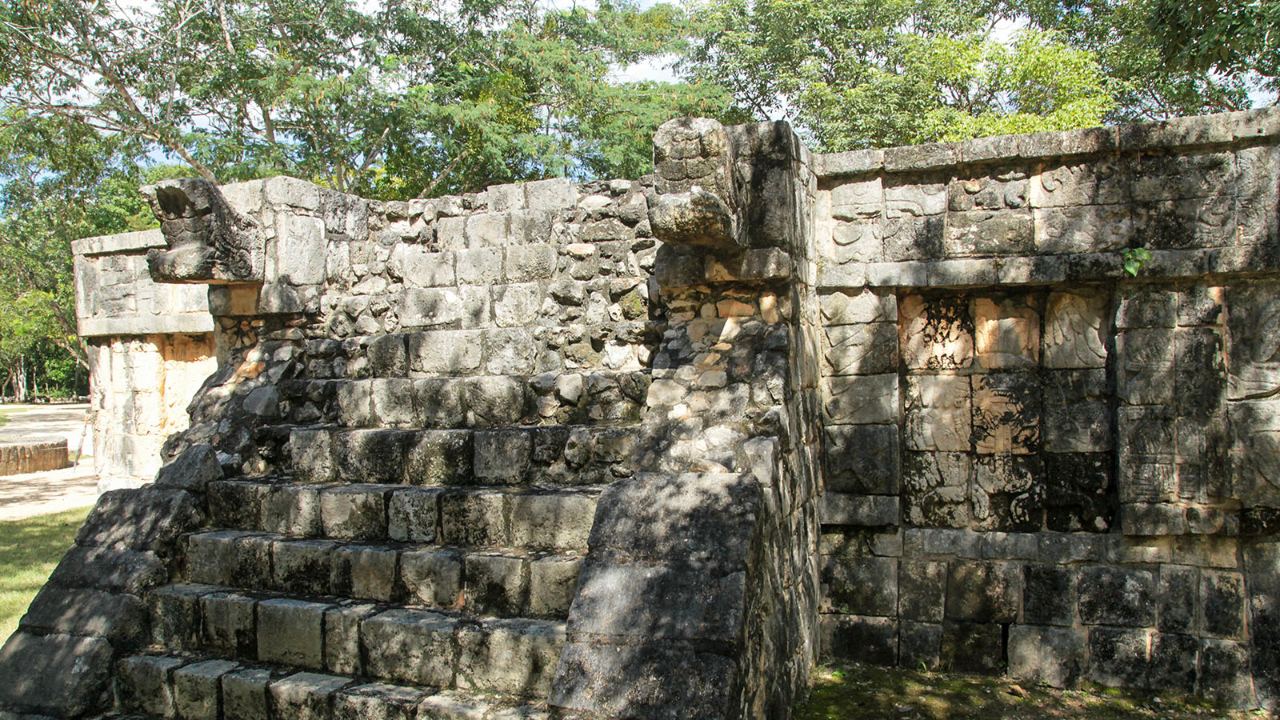
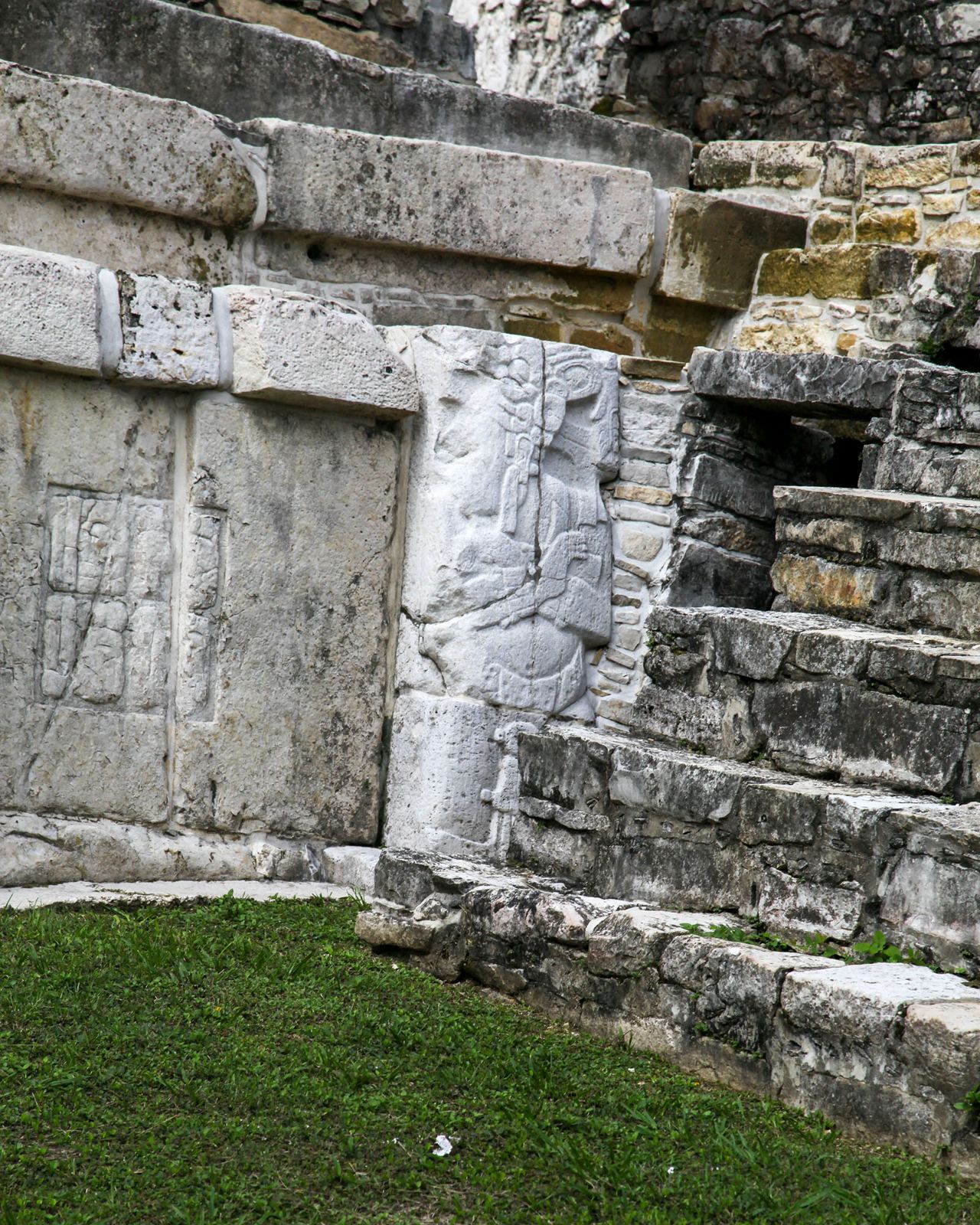
Staircases draw the eye naturally. Follow their edges from the lowest visible step toward the structure above. Look at what happens alongside them: a change in masonry, a projecting stone, a band of decoration.
I love the chance to climb where it’s permitted. The view changes as you go up: walls line up differently, a plaza opens out below, and you begin to see how the buildings fit together. When the steps are closed, there is still plenty to explore from the visitor paths.
In our staircase photograph, patches of sunlight and shade cross the stonework. That light makes texture visible, but it also competes with the architecture. When photographing a similar scene, take a moment to decide what should be easiest to see. A tighter composition may be more effective than including every surrounding tree.
Give details their own photograph
Uxmal is especially associated with Puuc architecture, including elaborately decorated facades. That context makes close observation rewarding, although the identity of any particular carved motif should be checked rather than guessed. INAH’s introduction to Uxmal provides a starting point for understanding the site.
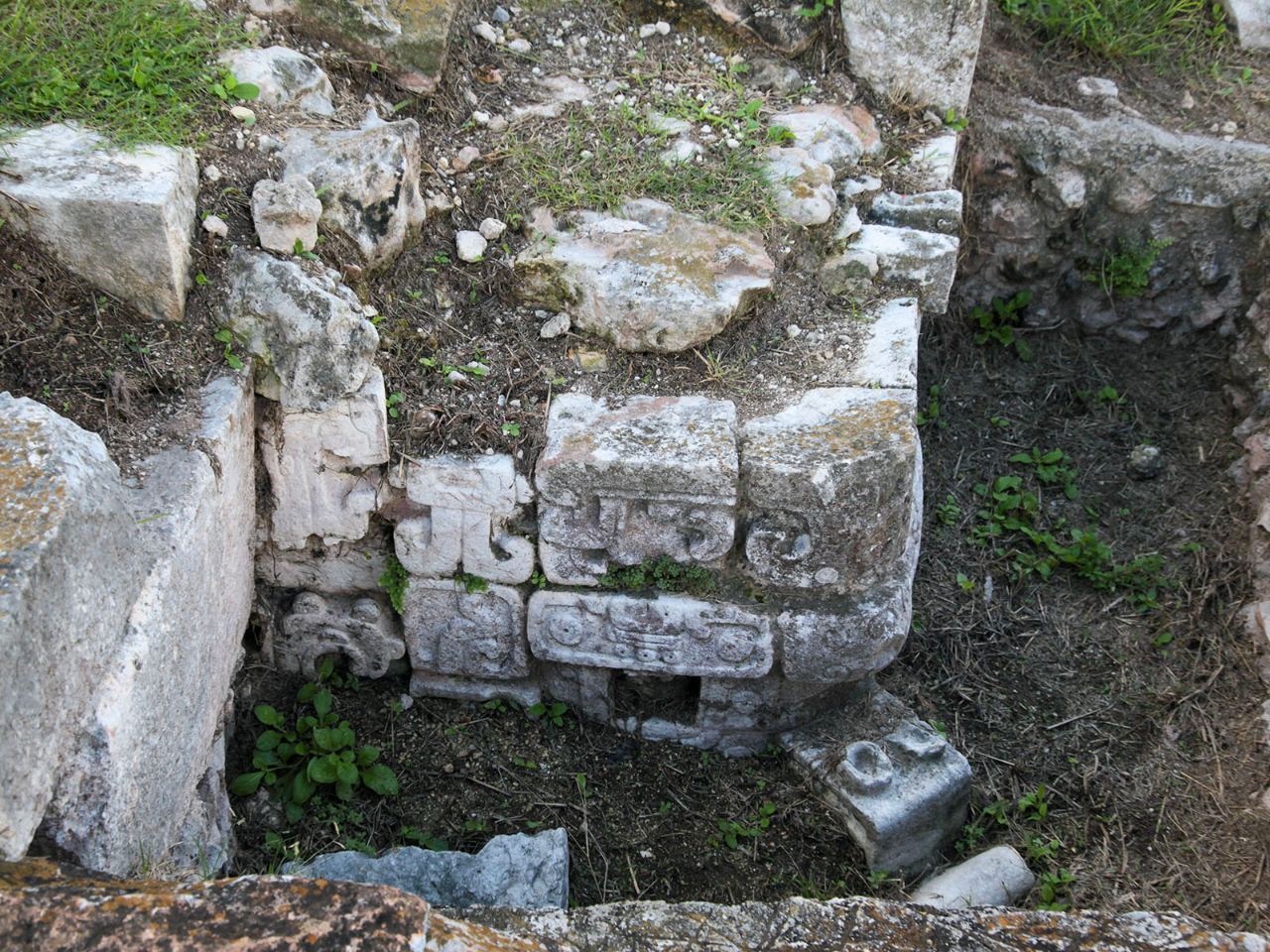
A close photograph can show a carved surface, its weathering, and its relationship to surrounding blocks. It cannot, by itself, establish whom a figure represents or why a stone occupies its present position. Read the interpretation panels, consult the site guide, and keep those notes with your photographs.
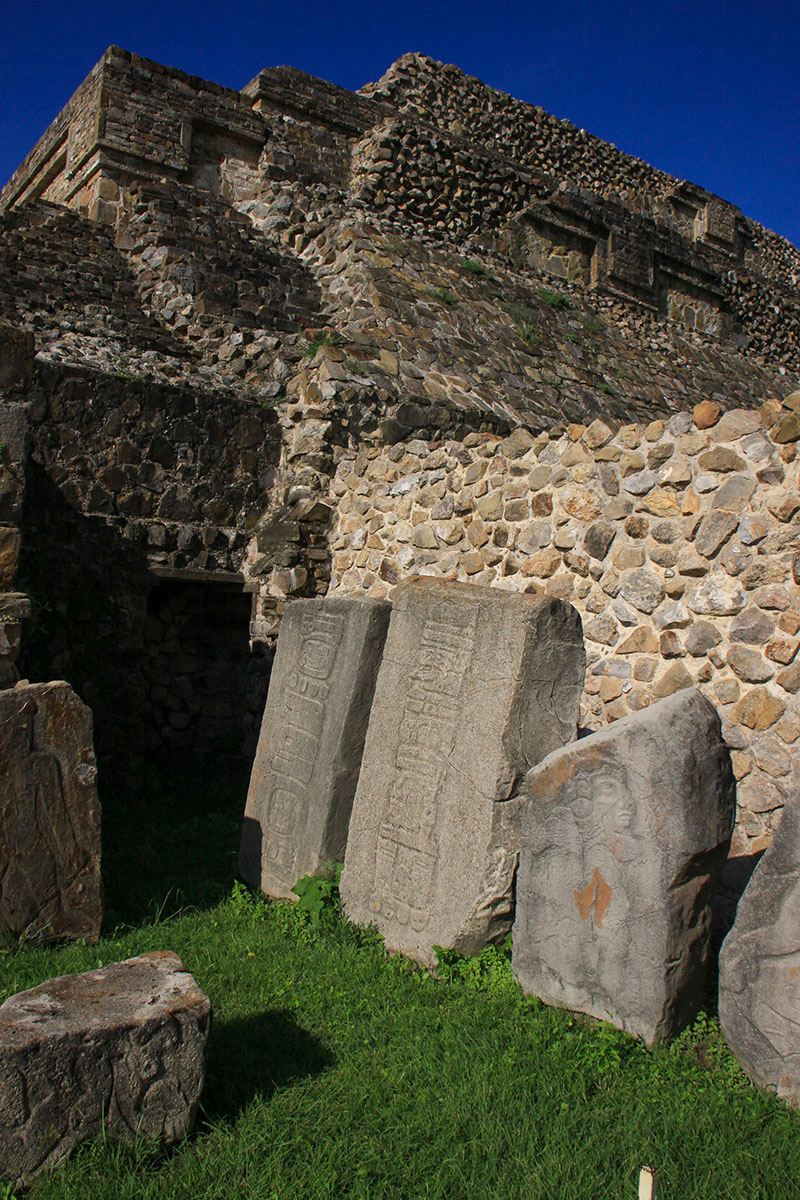
At Monte Albán, our vertical photograph brings carved slabs and the building behind them into one composition. It is a useful reminder to photograph a detail in context before moving closer. INAH describes a site whose architecture extends across a large, deliberately shaped landscape; an individual carving is one part of that larger setting. INAH’s Monte Albán overview.
Include a quieter view
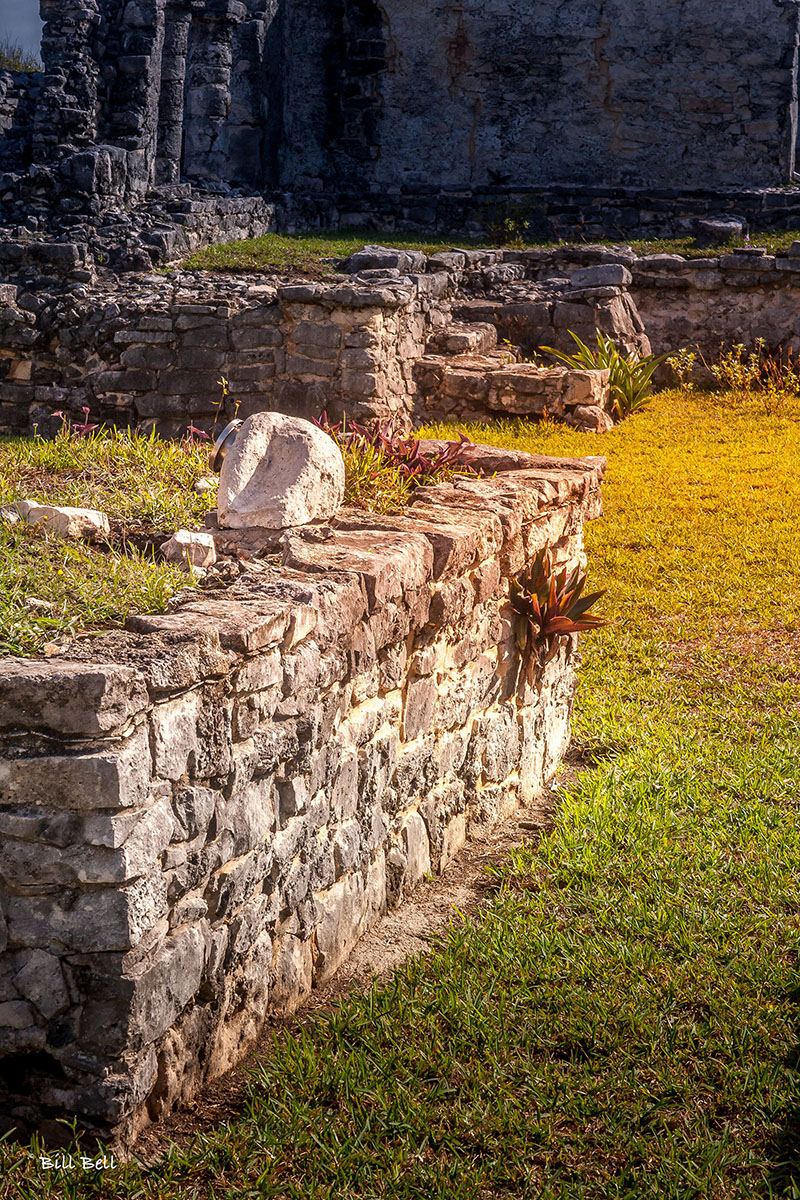
Not every photograph needs a dramatic facade. A low wall beside grass, or smaller remains framed by woodland, can provide a pause in a photo essay.
The Tulum wall image does this through a simple diagonal. The woodland photograph takes another approach, placing pale masonry among roots, leaves, and tree trunks. Neither needs to compete with the largest monument to be worth looking at.
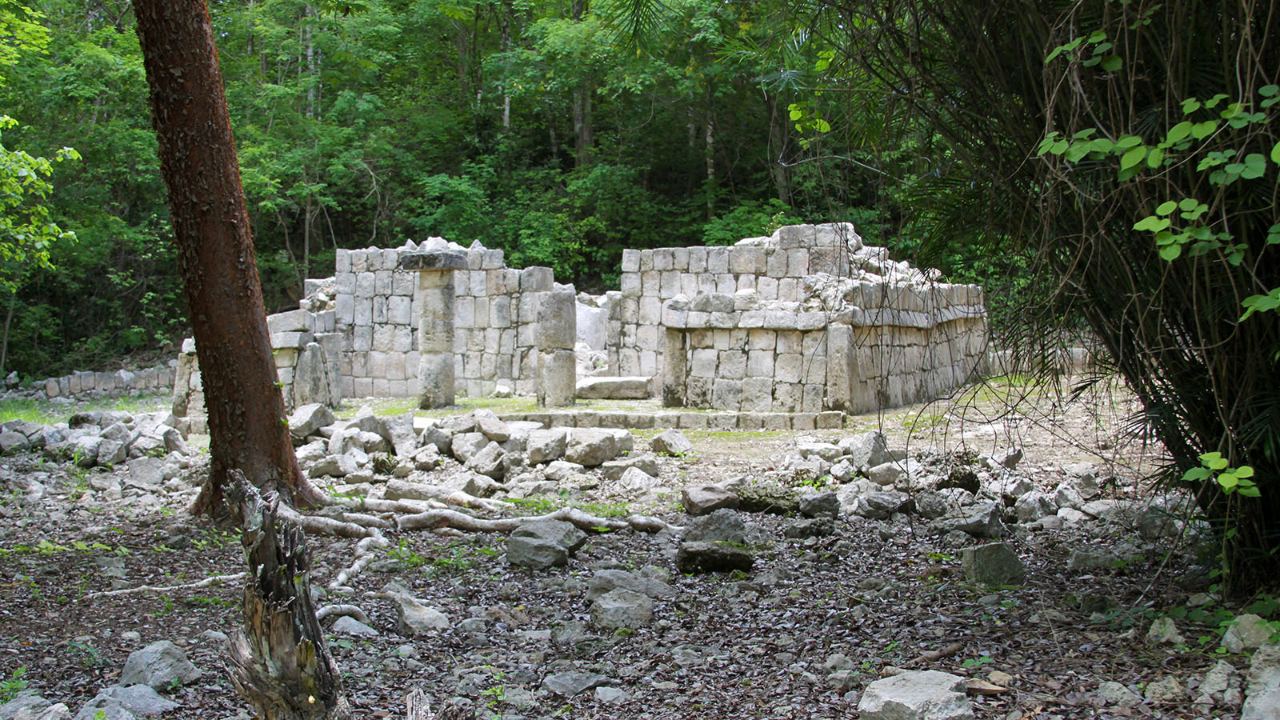
For Dorothy and me, those quieter places are a big part of the attraction. We love exploring the jungle paths open to visitors, looking for the tucked-away spots that are easy to walk past. A little stretch of wall among the trees can hold my attention just as long as the grand building everyone came to see.
Take the pyramid photograph, of course. Then give yourself time to look around. Follow an open path, stop at the smaller remains, and look closely at the stonework. That’s the part Dorothy and I love: there is always something else to notice.
Keep exploring
Continue with our guides to Uxmal and Monte Albán.