Category: Travel & Photography

We Always Stayed Longer at the Ruins

Palenque, Uxmal and Teotihuacán
Story and photography by Bill Bell, with recollections from Dorothy Bell

Dorothy and I could spend an inordinate amount of time exploring Mexico’s archaeological sites. And we did.

We have always loved Mexico’s history, especially the opportunity to explore these extraordinary monuments to its Indigenous past. Palenque, Uxmal and Teotihuacán were three places where we were quite happy to lose track of time.

We aren’t archaeologists. We are two curious travellers who wanted to look, learn and understand something of the lives behind the buildings. A quick walk through, a photograph and back on the road was never going to be enough for us.

There was always something else to see. And, as Dorothy reminded me when she read this, another story to hear—or a family memory to add to the ones we already had.

Palenque: monuments, stories and sounds

At Palenque, the setting is part of the experience. The buildings and the surrounding jungle draw your attention in different directions. You look at what has been uncovered, then wonder what lies beyond it.

It takes some imagination to see a living city where we now see an archaeological site. But that was part of what fascinated us. People worked here, made decisions, practised their beliefs and went about their lives.

Then there were the stories. An ancient king. The Red Queen. The eccentric count associated with the site’s early exploration. The people who studied Palenque, wrote about it and fell in love with it, much as we did.

We could spend hours looking at the buildings and listening to accounts of their history. Then a howler monkey would cry out deep in the jungle and change the whole atmosphere. Suddenly, you were very aware of where you were standing.

Dorothy calls Palenque “our sweet city of monuments, stories and sounds.” That captures something a list of temples and dates never quite could.

With a camera, there was another reason to slow down. A wide photograph gave you the setting. Moving closer brought out the stonework and workmanship. Both deserved time, and I was rarely in a hurry to put the camera away.

Explore our Palenque guide on Drive Mexico.

Uxmal: a place we loved to share
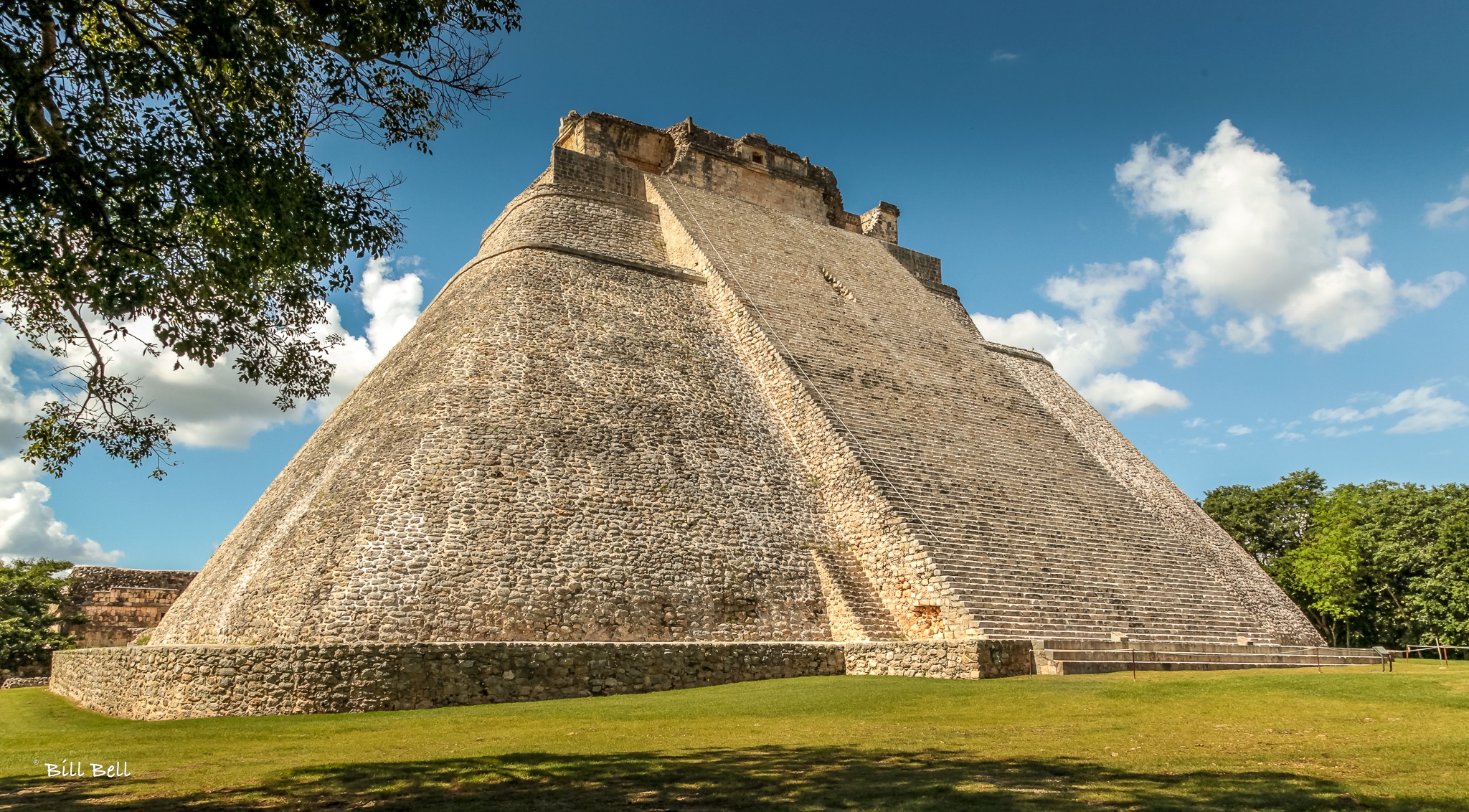
Pyramid of the Magician at Uxmal
Pyramid of the Magician at Uxmal — Photography by Bill Bell.

Uxmal rewards a closer look.

The decorated façades can hold your attention long after you have taken in the buildings themselves. Patterns, carved faces and repeated forms make you stop and examine what you might otherwise have walked past.

I find that photography encourages this. You begin by looking for a picture and end up studying something.

Dorothy and I could spend far longer than we intended there. Another detail to examine. Another angle to consider. Another question neither of us could answer.

And then there were the legends. The dwarf magician said to have built the great pyramid in a single night. Stories that sent your imagination off in another direction. At the ball court, we wondered about the people who had played there and those who had watched.
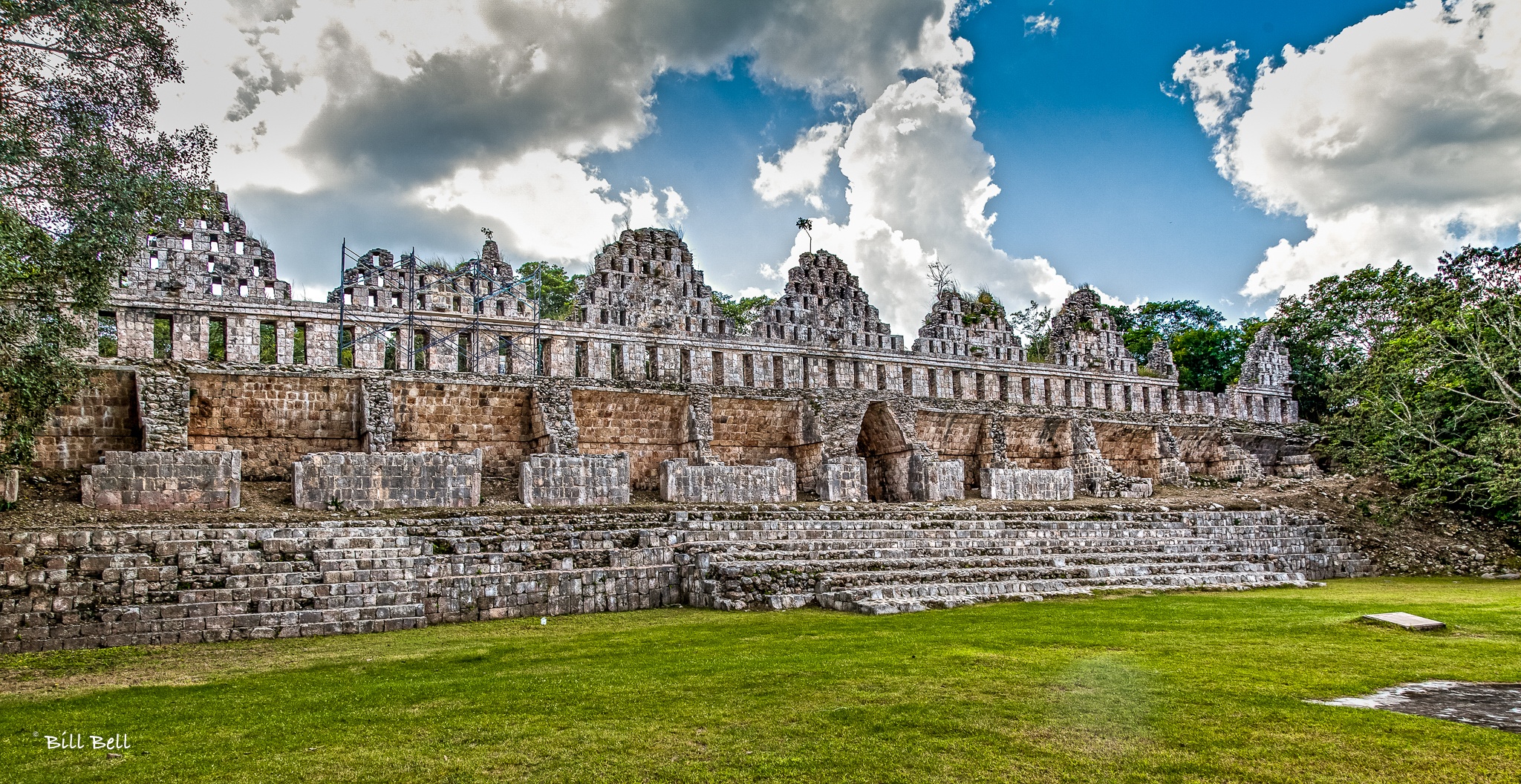
Stone architecture at Uxmal
Stone architecture at Uxmal — Photography by Bill Bell.

Alongside those old stories, our family collected a few of its own.

On one visit, our son Adam decided he wasn’t climbing any farther. Getting him down became my job, with Adam on my back. It is the sort of thing that stays in the family memory long after you have forgotten what the guidebook said.

We also remember introducing our cousin Maisie to Uxmal and sharing our fascination with the Maya. There is a particular pleasure in taking someone to a place you love and watching them discover it.

For us, Uxmal became a place of family memories as well as ancient history. We loved sharing it.

Explore Uxmal through our photographs and guide on On the Road in Mexico.

Teotihuacán: trying to take it all in
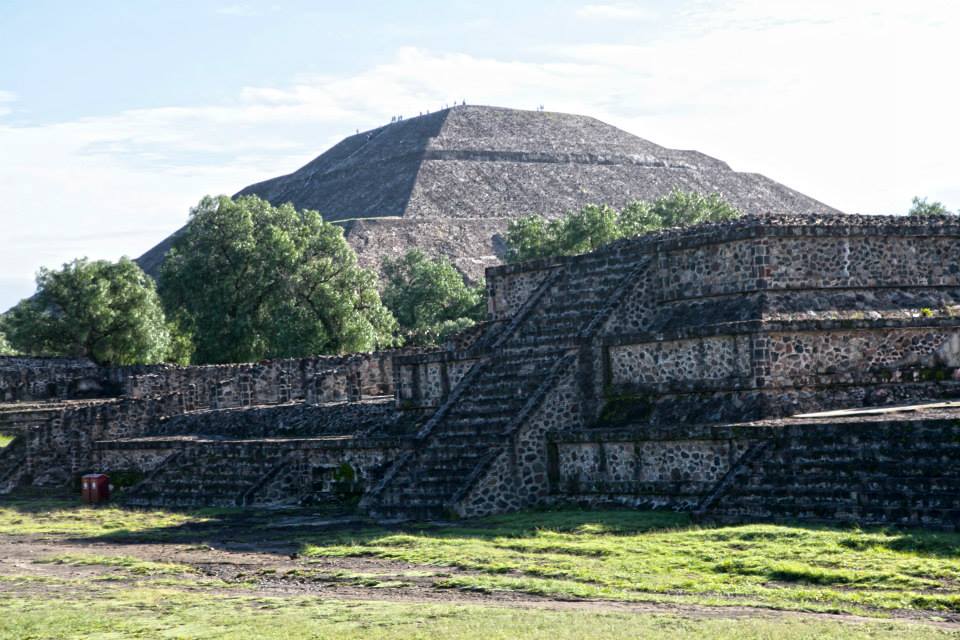
The pyramids and platforms of Teotihuacán
The pyramids and platforms of Teotihuacán — Photography by Bill Bell.

At Teotihuacán, it is the scale that first makes you pause.

The long views along the Avenue of the Dead and the great pyramids give some sense of the ambition behind this city. Even then, a photograph struggles to convey the whole experience.

Our visits brought together so many things: climbing where it was permitted at the time, exploring the museum, and walking down the Avenue of the Dead, imagining ourselves as a king or a soldier moving through a living city.

At each monument there were more questions. How did people live? How was such a place organised? What did it take to build and sustain it?

Those are large questions for a couple of visitors with a camera. We certainly didn’t leave with all the answers. But we enjoyed giving the questions some time.
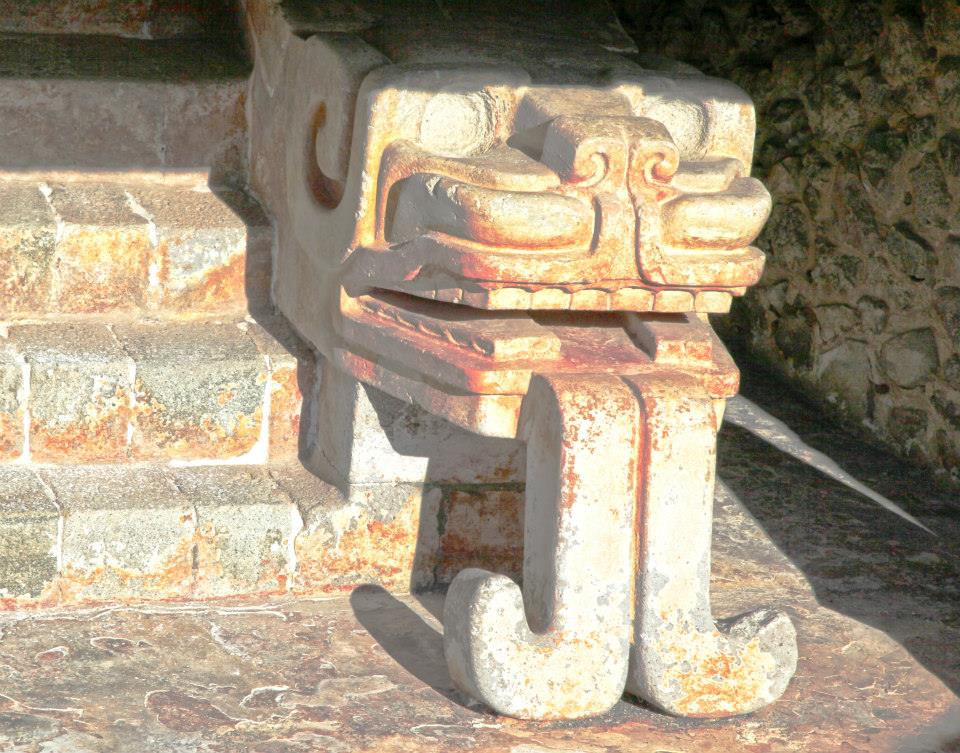
Carved stone detail at Teotihuacán
Carved stone detail at Teotihuacán — Photography by Bill Bell.

The museum and the smaller details helped bring our attention back from the enormous structures to the people who had lived among them. A carved face could hold my attention just as surely as a pyramid.

Teotihuacán also reminded us how easily visitors can compress different peoples and centuries into one vague idea of “ancient Mexico.” The more we explored, the more we understood that each place deserved to be considered on its own terms.

Read our guide to exploring Teotihuacán and the Avenue of the Dead.

Time well spent

Palenque, Uxmal and Teotihuacán are very different places. What they shared, for Dorothy and me, was the ability to hold our attention—and to bring us back.

We learned to be careful with the word “ruins.” It describes the remains of buildings, but it can suggest that the people and their cultures simply vanished. Mexico’s Indigenous communities are part of the country’s present as well as its past. Their histories extend far beyond the monuments visitors come to photograph.

Looking through my photographs now, I see reminders of how much there was to learn. Some pictures show the grand views. Others record a small detail that was enough to make me stop.

They also bring back our family visits. The children. A cousin discovering somewhere special. Dorothy and me taking our time, talking about what we had seen and wondering about what we still didn’t understand.

We loved that part of travelling in Mexico. We could follow our curiosity and stay a little longer.

At the archaeological sites, “a little longer” often became quite a while.

Neither of us considered it time wasted.

Originally published in Drive Mexico Magazine. Planning your own journey? Visit On the Road in Mexico and our Mexico trip-planning pages for help getting started.
Beyond the Pyramid: What to Notice at Mexico’s Ancient Sites

Columns, carved stones, and quiet corners reward a closer look—and can change the photographs you bring home.

Words and photographs by Bill Bell

I’m Bill Bell, and Dorothy is my wife. Together, we’ve been exploring Mexico’s ancient sites for over 35 years, sharing a love of travel, discovery, and the places we find along the way. We love wandering through these places: following jungle paths, climbing where it’s permitted, and looking for the tucked-away corners beyond the main plaza. Part of the pleasure is wondering what’s around the next bend—a small building, a carved stone, or a view we would have missed if we’d turned back at the pyramid.

Our visits go back to the days when you could still climb the pyramids at places like Chichén Itzá. We loved that sense of discovery, and we still do. Even with today’s restrictions, there are many places left to explore within the areas open to visitors. For me, taking photographs is part of that pleasure—a way to remember both the grand views and the small discoveries Dorothy and I make together.

This story is an invitation to take a little more time with these sites. The main pyramid may be what brings you through the entrance, but there is often much more to notice: carved stones, smaller buildings, quiet courtyards, and paths through the jungle. We want to share the pleasure of looking beyond the best-known monument and finding the details that make a place memorable to you.

The photographs here offer a few starting points for that kind of visit. You don’t need to be an archaeologist or a serious photographer—just curious enough to slow down, look closely, and explore the areas open to visitors. A photograph can help you remember those discoveries, but enjoying the place comes first.

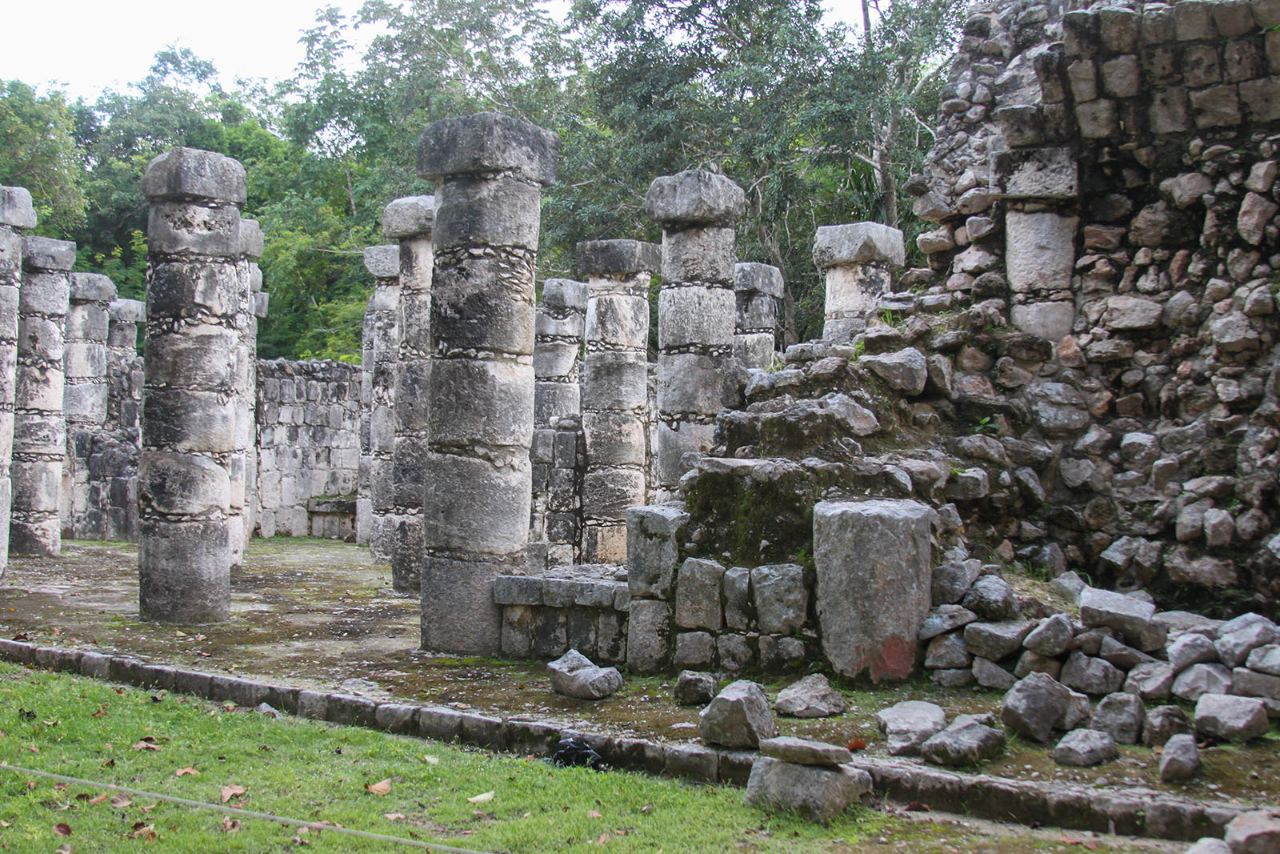
Rows of stone columns create layers of depth among the surviving walls.
Rows of stone columns create layers of depth among the surviving walls. Photograph by Bill Bell.

The tallest building usually gets the first photograph. It rises above the trees or anchors a plaza, giving us an obvious place to point the camera. Once that picture is taken, we like to see what else is waiting along the next path.

A row of columns. A carved surface beside a staircase. The meeting of two low walls. These smaller features can hold our attention just as firmly, especially when we stop trying to fit an entire archaeological site into one frame.

Start with the spaces between

At a group of columns, look beyond the individual stones. Notice the intervals, the alignment, and the way one row appears through another. A slight change in viewpoint can turn a confusing collection of ruins into a readable arrangement.

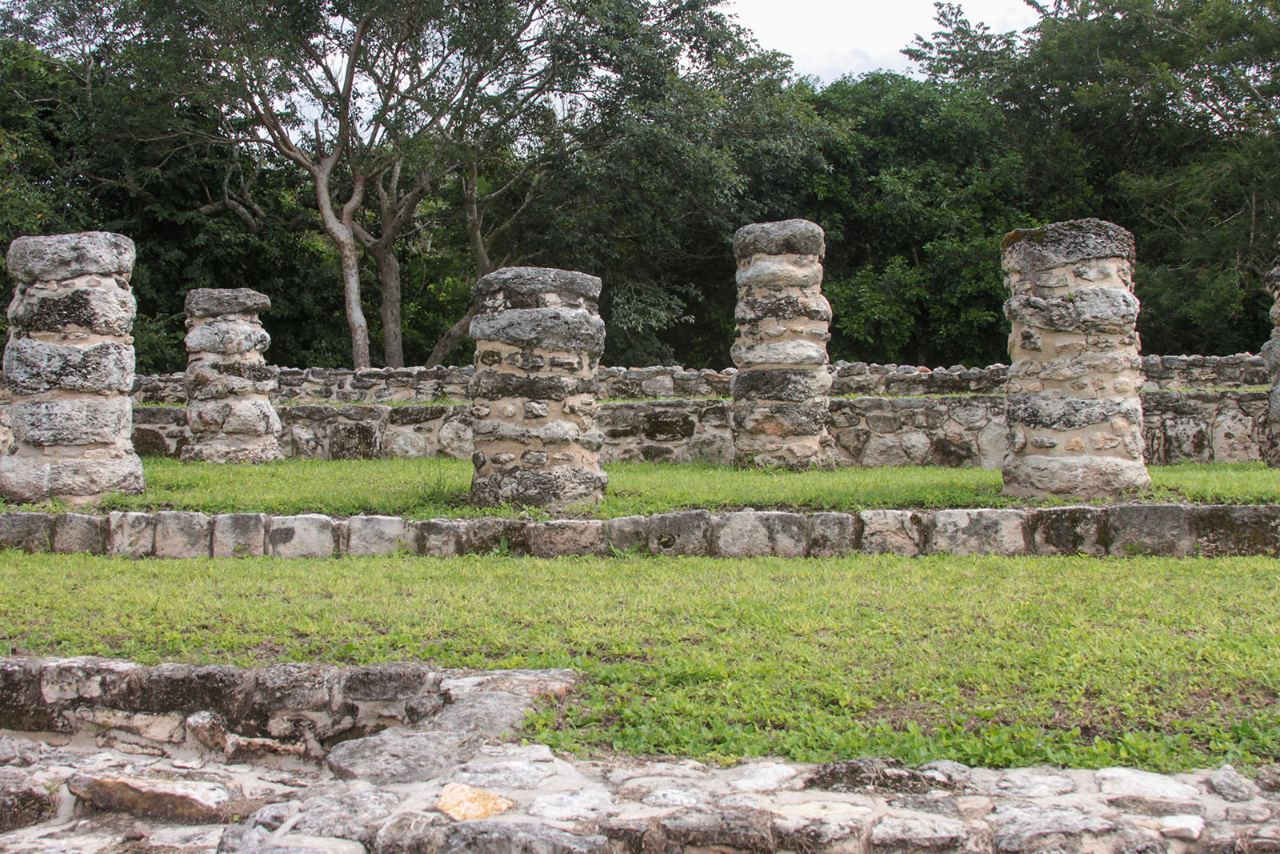
In one of our photographs, rows of columns overlap, drawing the eye deeper into the stonework. In another, shorter columns spread across an open, grassy space. I like having both kinds of picture: one that helps me remember the place, and another that brings me back to something small I stopped to look at.

Short columns and low walls invite a closer look at the arrangement of an ancient space.
Short columns and low walls invite a closer look at the arrangement of an ancient space. Photograph by Bill Bell.

Let your eyes follow the steps

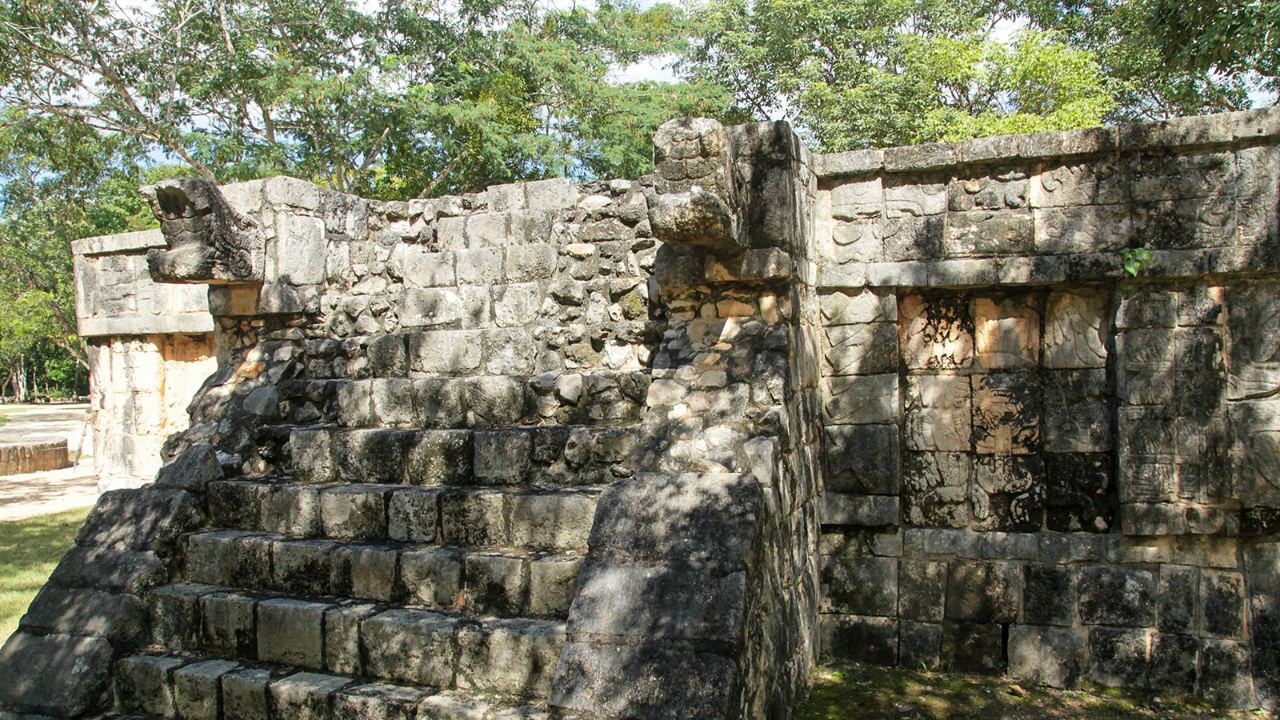
Staircases draw the eye naturally. Follow their edges from the lowest visible step toward the structure above. Look at what happens alongside them: a change in masonry, a projecting stone, a band of decoration.

I love the chance to climb where it’s permitted. The view changes as you go up: walls line up differently, a plaza opens out below, and you begin to see how the buildings fit together. When the steps are closed, there is still plenty to explore from the visitor paths.

In our staircase photograph, patches of sunlight and shade cross the stonework. That light makes texture visible, but it also competes with the architecture. When photographing a similar scene, take a moment to decide what should be easiest to see. A tighter composition may be more effective than including every surrounding tree.

A stone staircase leads toward projecting forms and decorated masonry.
A stone staircase leads toward projecting forms and decorated masonry. Photograph by Bill Bell.

Give details their own photograph

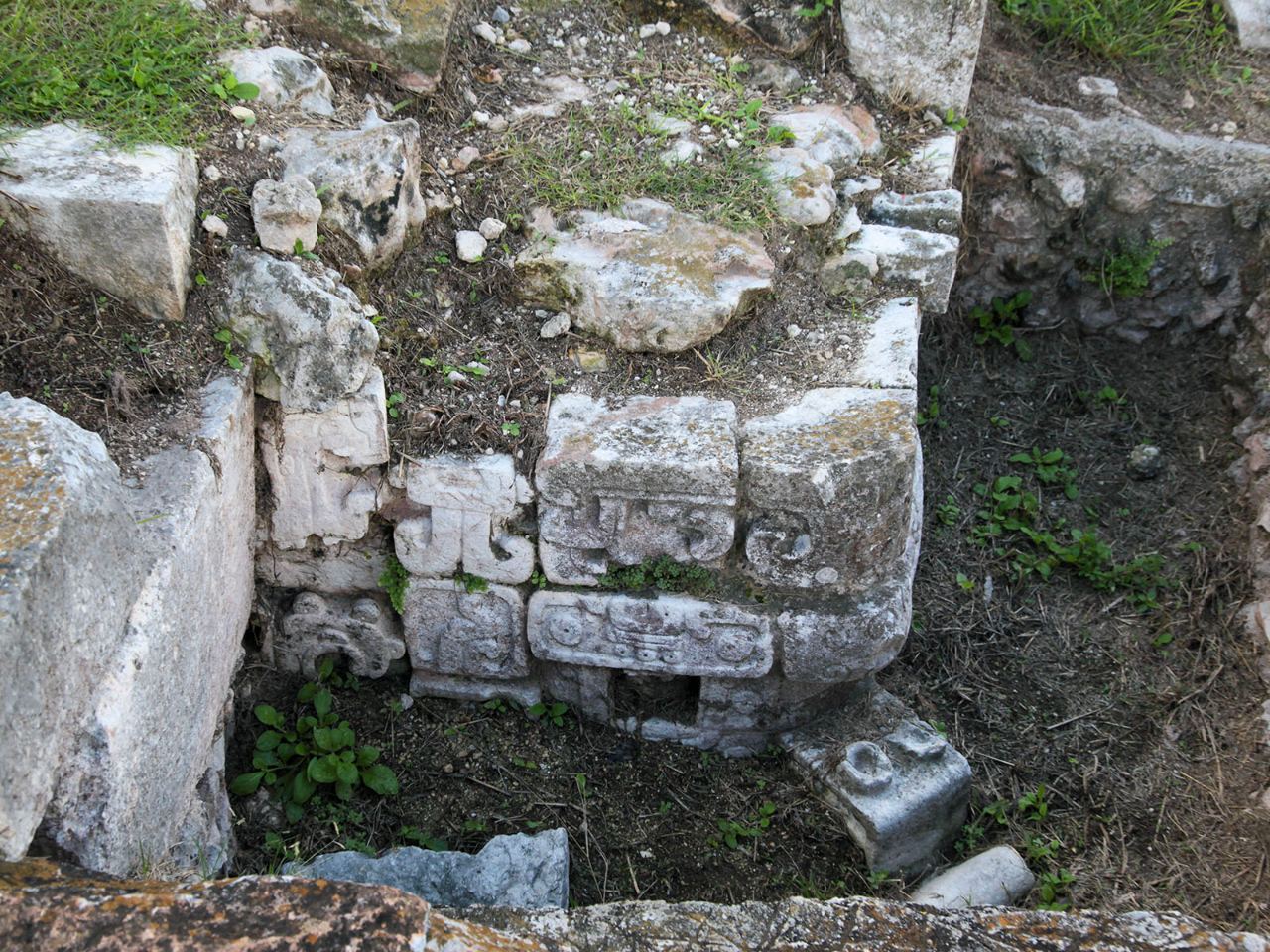
Uxmal is especially associated with Puuc architecture, including elaborately decorated facades. That context makes close observation rewarding, although the identity of any particular carved motif should be checked rather than guessed. INAH’s introduction to Uxmal provides a starting point for understanding the site.

Carved surfaces among weathered stone blocks.
Carved surfaces among weathered stone blocks. Photograph by Bill Bell.

A close photograph can show a carved surface, its weathering, and its relationship to surrounding blocks. It cannot, by itself, establish whom a figure represents or why a stone occupies its present position. Read the interpretation panels, consult the site guide, and keep those notes with your photographs.

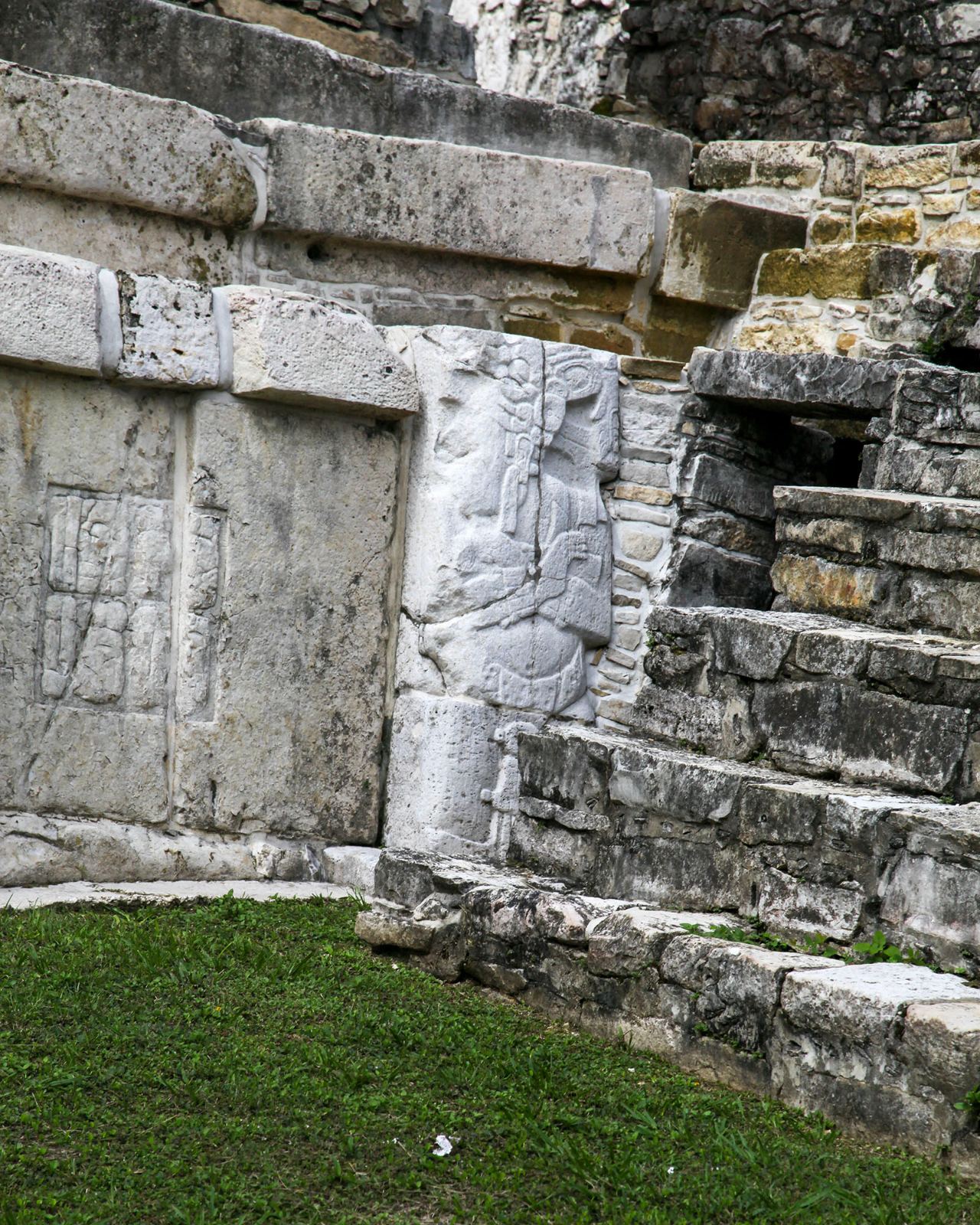
A carved figure beside the steps rewards a closer look.
A carved figure beside the steps rewards a closer look. Photograph by Bill Bell.

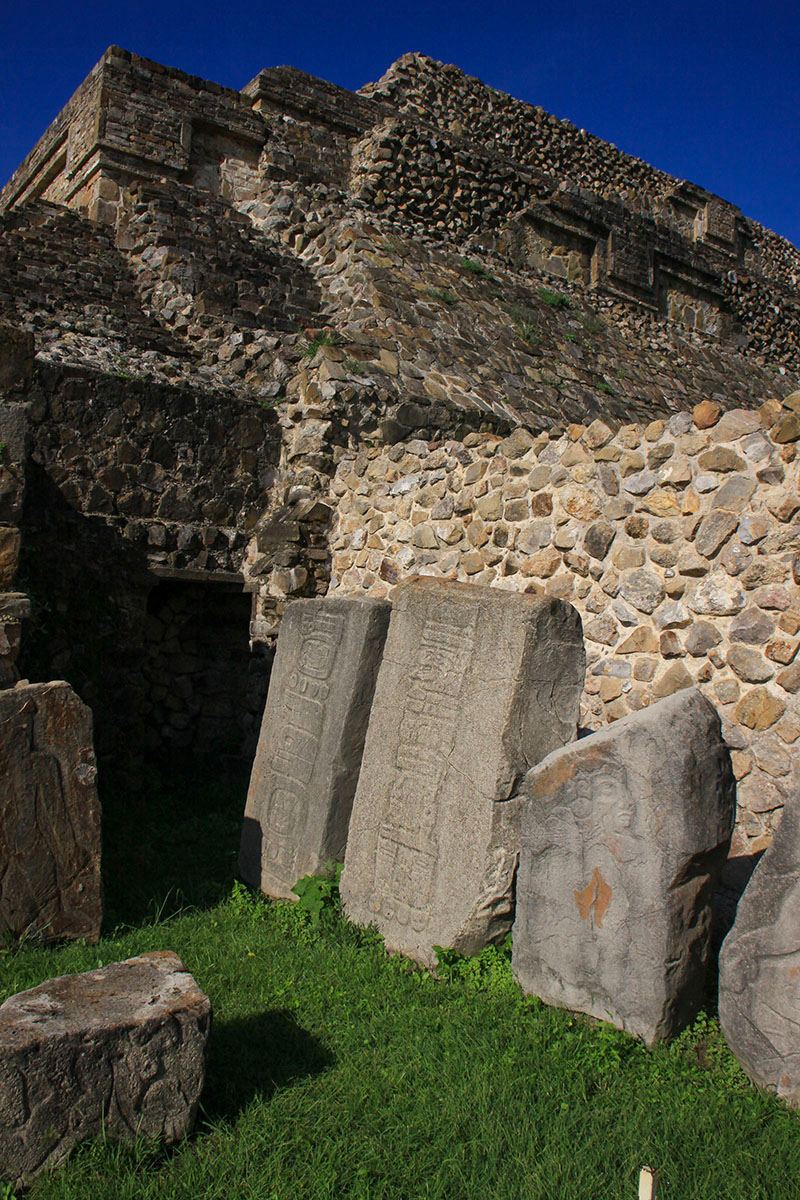
At Monte Albán, our vertical photograph brings carved slabs and the building behind them into one composition. It is a useful reminder to photograph a detail in context before moving closer. INAH describes a site whose architecture extends across a large, deliberately shaped landscape; an individual carving is one part of that larger setting. INAH’s Monte Albán overview.

Carved stone slabs and the architecture behind them at Monte Albán, Oaxaca.
Carved stone slabs and the architecture behind them at Monte Albán, Oaxaca. Photograph by Bill Bell.

Include a quieter view

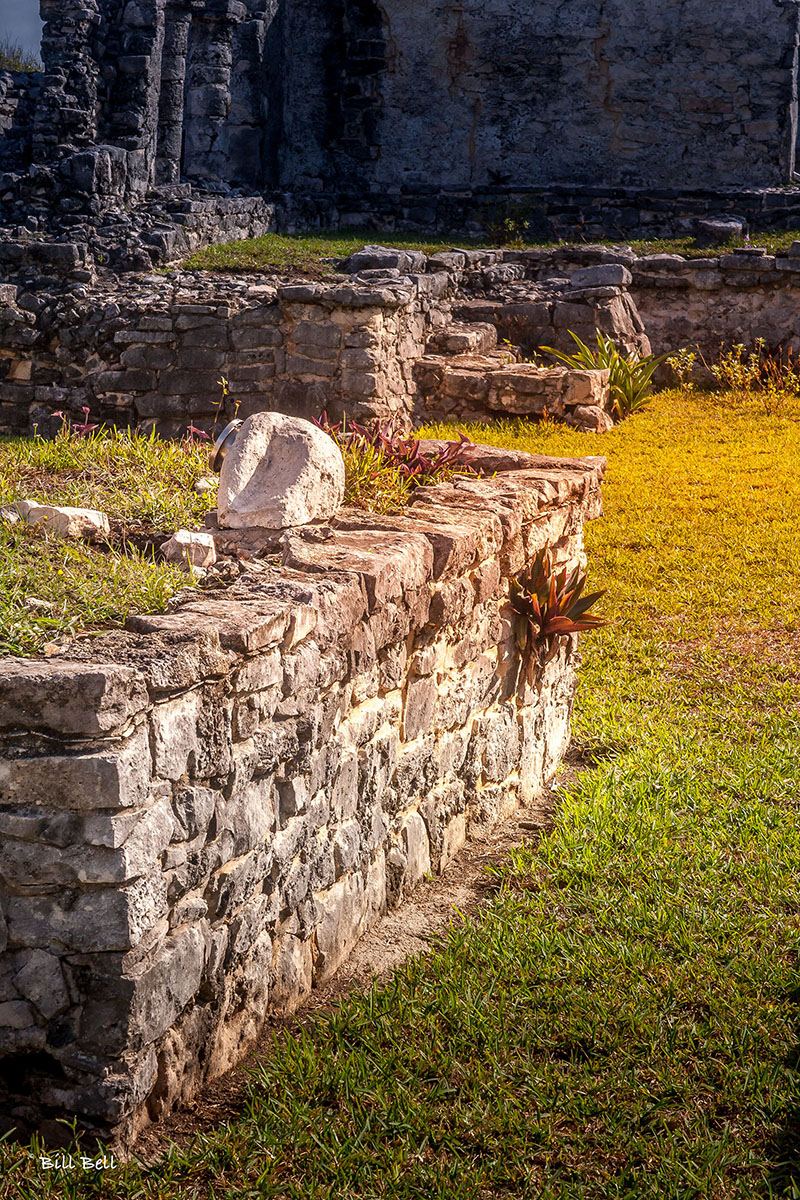
Not every photograph needs a dramatic facade. A low wall beside grass, or smaller remains framed by woodland, can provide a pause in a photo essay.

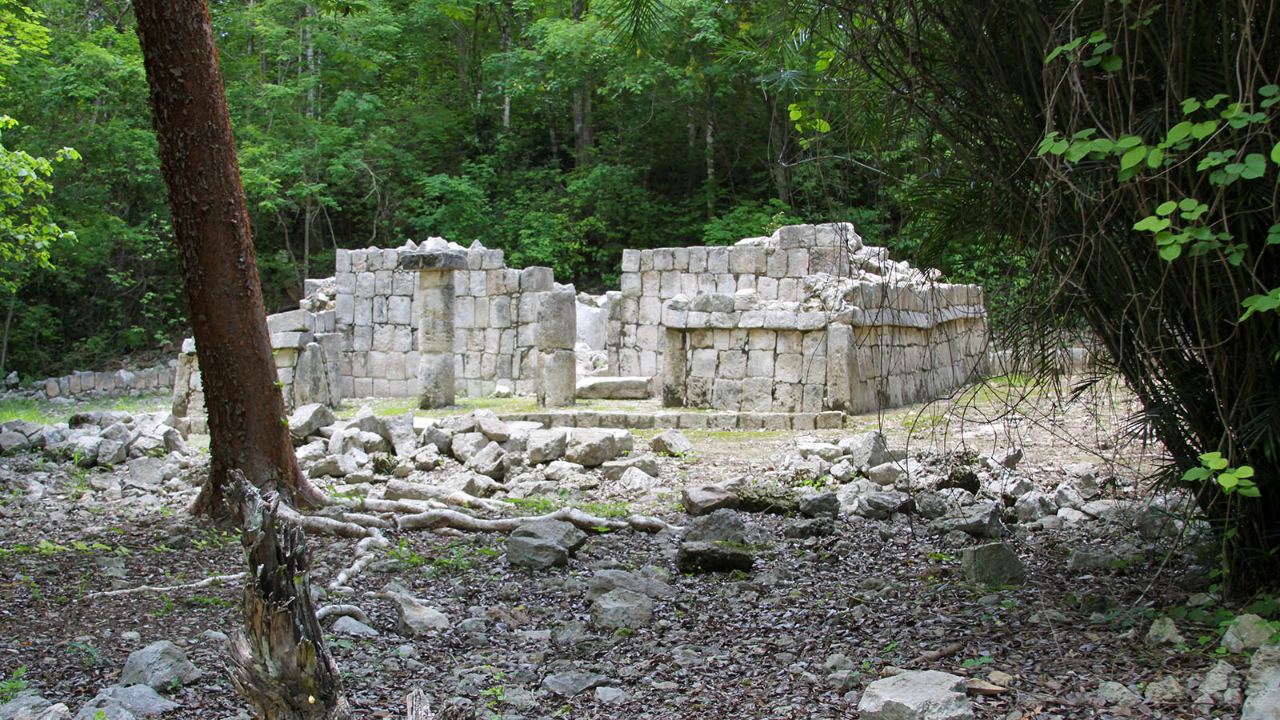
The Tulum wall image does this through a simple diagonal. The woodland photograph takes another approach, placing pale masonry among roots, leaves, and tree trunks. Neither needs to compete with the largest monument to be worth looking at.

Pale masonry framed by trees and exposed roots.
Pale masonry framed by trees and exposed roots. Photograph by Bill Bell.

For Dorothy and me, those quieter places are a big part of the attraction. We love exploring the jungle paths open to visitors, looking for the tucked-away spots that are easy to walk past. A little stretch of wall among the trees can hold my attention just as long as the grand building everyone came to see.

Take the pyramid photograph, of course. Then give yourself time to look around. Follow an open path, stop at the smaller remains, and look closely at the stonework. That’s the part Dorothy and I love: there is always something else to notice.

A low stone wall creates a strong diagonal at Tulum.
A low stone wall creates a strong diagonal at Tulum. Photograph by Bill Bell.

Keep exploring

Continue with our guides to Uxmal and Monte Albán.